概览
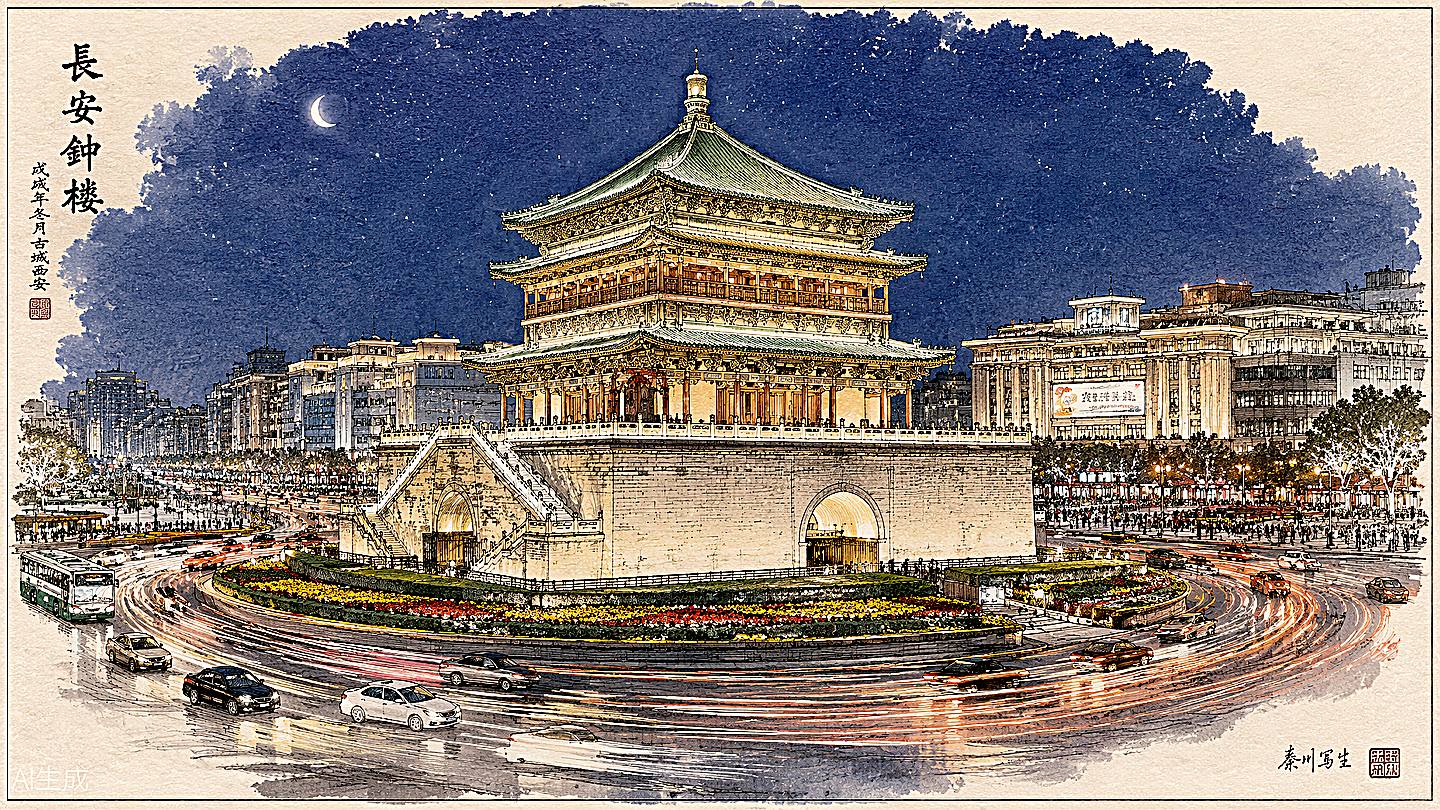
西安钟楼与鼓楼东西相望,相距约三百米,雄踞老城中轴与回坊街口,是明代城市报时建筑的代表作。「晨钟暮鼓」的报时制度延续了数百年,两楼与周边街巷共同构成西安老城的中心意象。两楼同为全国重点文物保护单位,也是西安城市的原点标志。作为明代报时中心,两楼见证了西安六百余年的晨昏更替。[1]
历史沿革
鼓楼始建于明洪武十三年(1380 年),钟楼建于洪武十七年(1384 年),初址在西大街迎祥观,明万历十年(1582 年)整体迁移至现址,是中国古建筑整体平移的著名案例。清代屡经修葺,1996 年两楼同列为全国重点文物保护单位。钟楼迁移后,西大街旧基址仍有遗迹可寻。[1]
看点
钟楼为砖木结构三重檐四角攒尖顶,通高 36 米,覆绿琉璃瓦,楼内悬有唐景云钟的仿制钟,原件存西安碑林博物馆;鼓楼高 34 米,南北两面分悬「文武盛地」「声闻于天」巨匾,楼上按二十四节气陈列大鼓,每日有编钟鼓乐表演。夜幕降临时两楼灯火通明,是西安夜景的标志性画面。[1]
参观贴士
地铁 2 号线、6 号线钟楼站下车,经地下盘道可达钟楼。两楼可购联票,登楼各约半小时;鼓乐表演场次固定,宜提前查询时间。建议傍晚登楼看落日,再步行至北院门回民街品尝小吃,夜景灯光通常持续至晚十点以后。两楼之间以钟鼓楼广场相连,广场之下是下沉式商业区。[1]
Overview
Facing each other about 300 meters apart, Xi'an's Bell Tower and Drum Tower command the old city's central axis at the gateway to the Muslim Quarter. For centuries their 'morning bell, evening drum' marked the hours of the city, and together they form the enduring image of old Xi'an.
The Drum Tower dates to 1380 and the Bell Tower to 1384; the latter was moved bodily to its present site in 1582, a celebrated feat of Ming engineering. Both were listed as national protected monuments in 1996. The 36-meter Bell Tower, triple-eaved and green-tiled, hangs a replica of the Tang-dynasty Jingyun Bell (the original rests in the Forest of Steles Museum); the 34-meter Drum Tower displays great drums for the twenty-four solar terms beneath the mighty 'Seat of Civil and Military Glory' plaque, with daily drum-and-bell performances.
Take subway Line 2 or 6 to Zhonglou Station; an underground passage leads to the Bell Tower. A joint ticket covers both towers, about half an hour each — check the drum performance schedule. Come at dusk for the sunset, then walk north into the Muslim Quarter for dinner; the illumination usually runs past 10 p.m.