概览
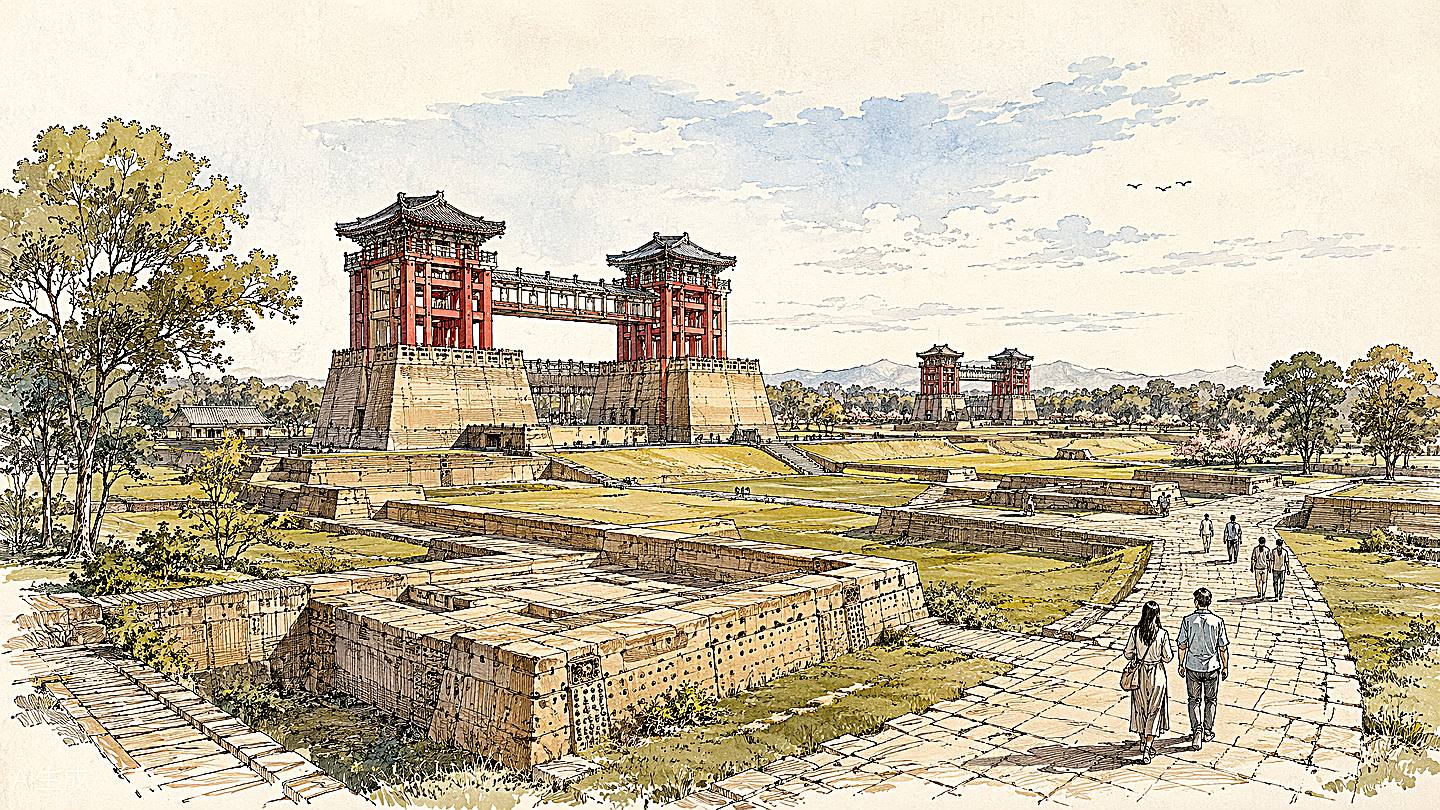
秦始皇兵马俑位于西安市临潼区骊山北麓,是秦始皇陵的陪葬坑群,距市区约 40 公里。三座已发掘俑坑出土陶俑、陶马八千余件,军阵按实战编列,千人千面,被誉为「世界第八大奇迹」。1987 年随秦始皇陵列入世界文化遗产名录。博物院与秦始皇陵遗址公园(丽山园)实行联票开放。[2]
历史沿革
兵马俑坑的营建始于公元前 246 年秦始皇即位之初,前后延续约四十年。1974 年 3 月,临潼西杨村农民打井时发现陶俑残片,震惊世界。1979 年,秦始皇兵马俑博物馆在一号坑遗址上建成开放;1980 年陵西侧出土两乘彩绘铜车马。如今遗址已整合为秦始皇帝陵博物院,涵盖兵马俑坑与丽山园。[1]
看点
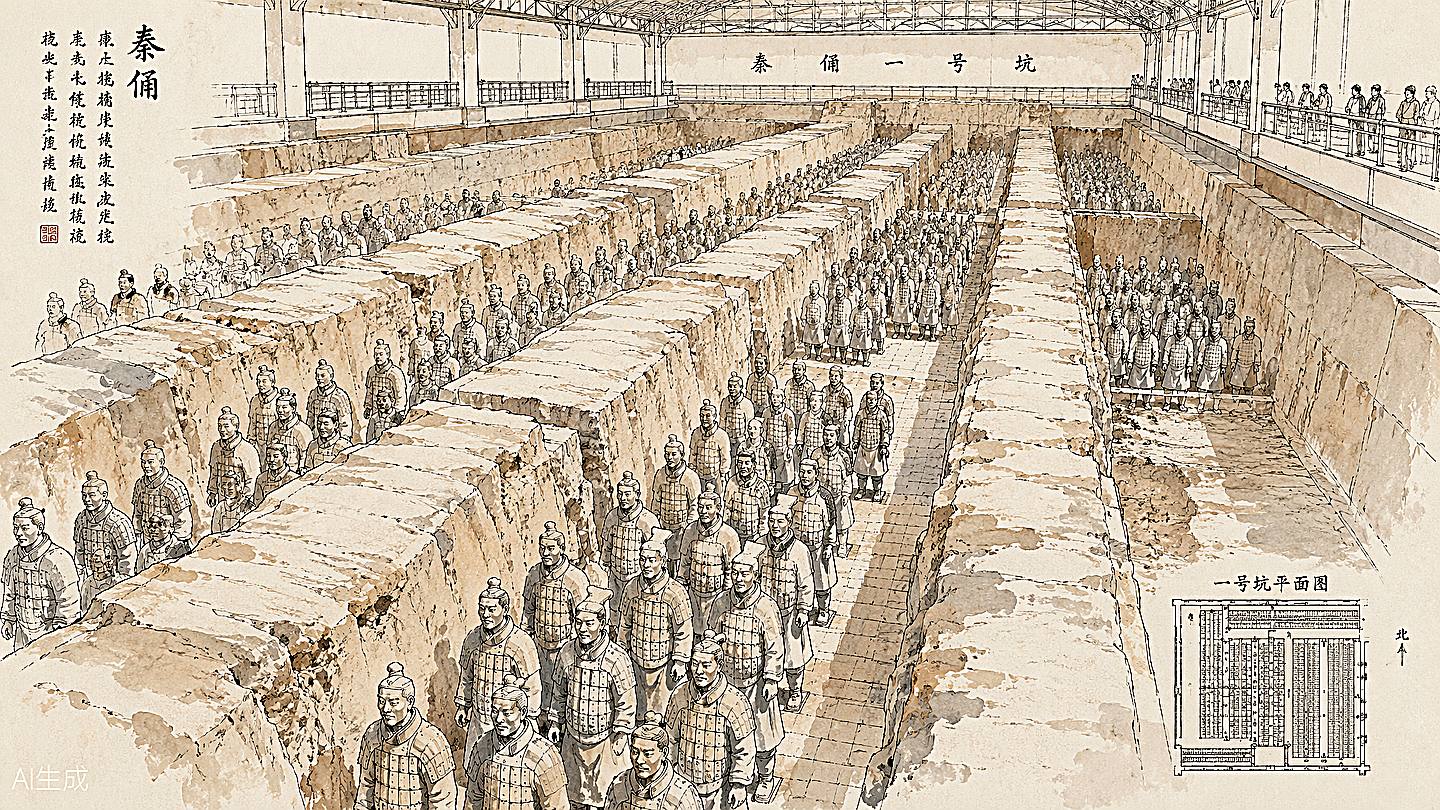
一号坑东西长 230 米、面积逾 1.4 万平方米,六千余件陶俑组成步兵与车兵混合军阵,气势最盛;二号坑由弩兵、骑兵、战车组成多兵种曲形阵;三号坑被认为是统帅三军的指挥部。铜车马展厅的两乘铜车马按真车二分之一铸造,金银构件齐备,被誉为「青铜之冠」。[1]
参观贴士
西安市区可乘地铁 9 号线至华清池站后转公交,或在纺织城乘游 5(306)路直达。建议按一号坑—三号坑—二号坑—陈列厅的顺序参观,全程约三小时;可租讲解器或请官方讲解员。旺季务必提前网上实名购票,上午十点前入馆人流相对较少。俑坑内光线较暗,参观请勿使用闪光灯,遵守文物保护规定。[1]
Overview
On the northern slopes of Mount Li in Lintong District, about 40 kilometers from downtown Xi'an, the Terracotta Army stands guard over the tomb of China's First Emperor. Three excavated pits have yielded more than 8,000 life-size soldiers and horses, marshaled in battle formation with individually modeled faces — hailed worldwide as the 'Eighth Wonder of the World' and listed by UNESCO in 1987.
The pits were built from 246 BC, when the First Emperor took the throne, and lay hidden until farmers digging a well found pottery fragments in March 1974. The museum opened over Pit 1 in 1979; two painted bronze chariots, cast at half scale, followed in 1980. Pit 1 stretches 230 meters with some 6,000 figures; Pit 2 holds archers, cavalry, and chariots; Pit 3 is thought to be the command post. The site now forms the Emperor Qinshihuang's Mausoleum Site Museum together with Lishan Garden.
Take subway Line 9 to Huaqing Pool Station and transfer to a bus, or ride tourist bus 306 from Fangzhicheng. Visit the pits in the order 1–3–2 followed by the exhibition hall — about three hours with an audio guide. Book timed tickets online in advance in high season; arriving before 10 a.m. means thinner crowds.